
Home > Guerra Junqueiro
Guerra Junqueiro
15th September, 1850 (Bragança, Portugal) – 7th July, 1923 (Lisbon, Portugal)
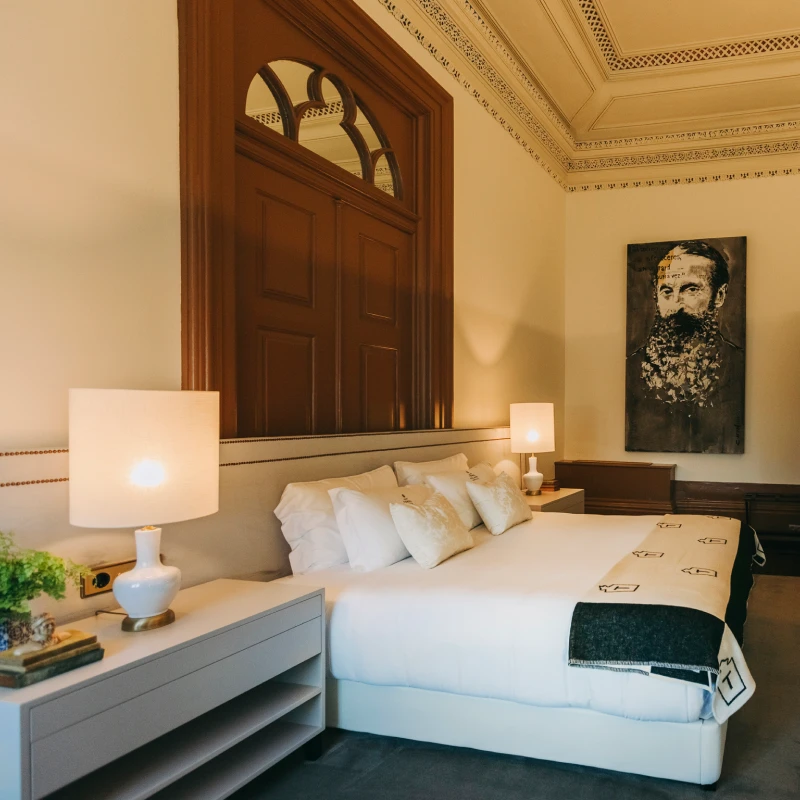
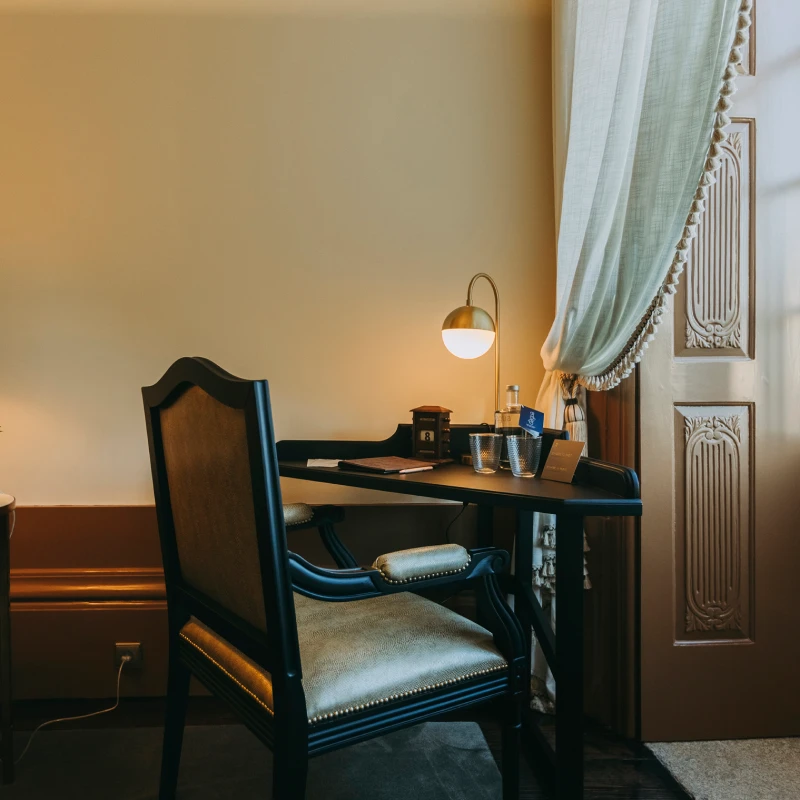
In our Torel Palace Porto, a boutique hotel in the center of Porto, we pay tribute to Guerra Junqueiro in one of our Suite Superior hotel rooms, with a balcony and pool view. The suite, adorned by designer Isabel Sá Nogueira, stays on the second and penultimate floor of the palace and is one of the most spacious rooms in our palace.
One of the particularities of this Suite is the giant cube, fixed in the center of the room. It is in this cube, entirely lined with a mirror, that the bathroom, decorated in marble, is based.
- Up to 3 People
- 49 m2
- Double or Twin Bed
- Pool View
- Balcony
- Coffee Machine
- Mini Bar
- Television
- Free Wi Fi
- Air Conditioning
- Hairdryer
- Safe



About...
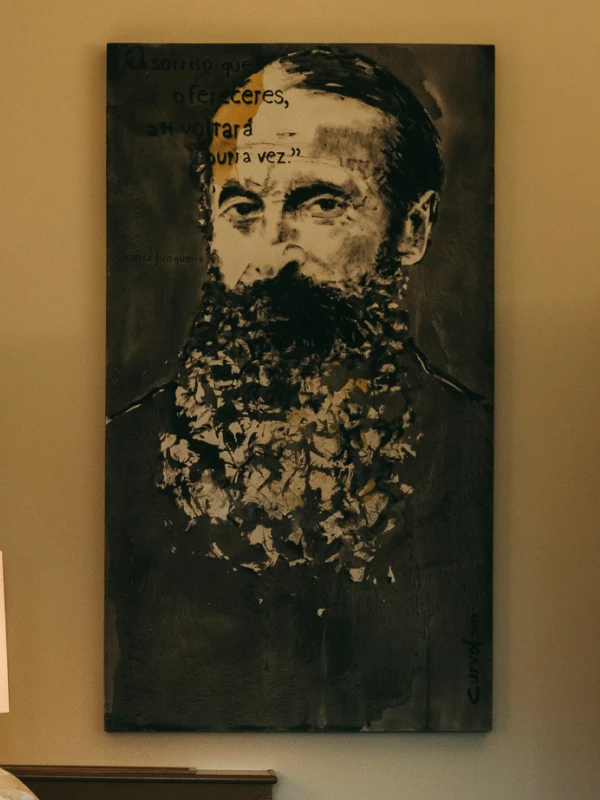
Abílio Manuel Guerra Junqueiro was an administrative employee, politician, deputy, journalist, and Portuguese poet.
Some of her main works:
The Death of King John (1874)
Tales for Children (1875)
The Muse on Holiday (1879)
Homeland (1915)
“To be happy is to be strong. Strength is a lever” – The Death of King John, Guerra Junqueiro.
He was considered the “Portuguese Victor Hugo” and, by many, the greatest Portuguese social poet of his time.
Junqueiro was a law student at the University of Coimbra until 1873 when he began to show a talent for poetry. In 1874, he published “A Morte de D. João”, achieving huge success and receiving praise from famous writers such as Camilo Castelo Branco and Joaquim Pedro de Oliveira Martins.
In addition to being a poet, he was a politically active character in the establishment of the Portuguese Republic. His poetry reflected the author’s deep discontent with the decadence of Portugal and its opposition to the monarchy, helping to create the revolutionary environment that led to the establishment of the Republic
Throughout his life, he gained recognition not only nationally, but also internationally. Several writers expressed admiration for his writing, such as Eça de Queiroz, who considered him “the great poet of the Peninsula”, Fernando Pessoa, who classified Pátria as a work “superior to the Lusíadas” and Miguel de Unamuno, a Spanish writer, who considered “one of the greatest poets in the world”. Today, the Casa-Museu Guerra Junqueiro Cultural Center in Porto honors the memory of this famous writer.

